
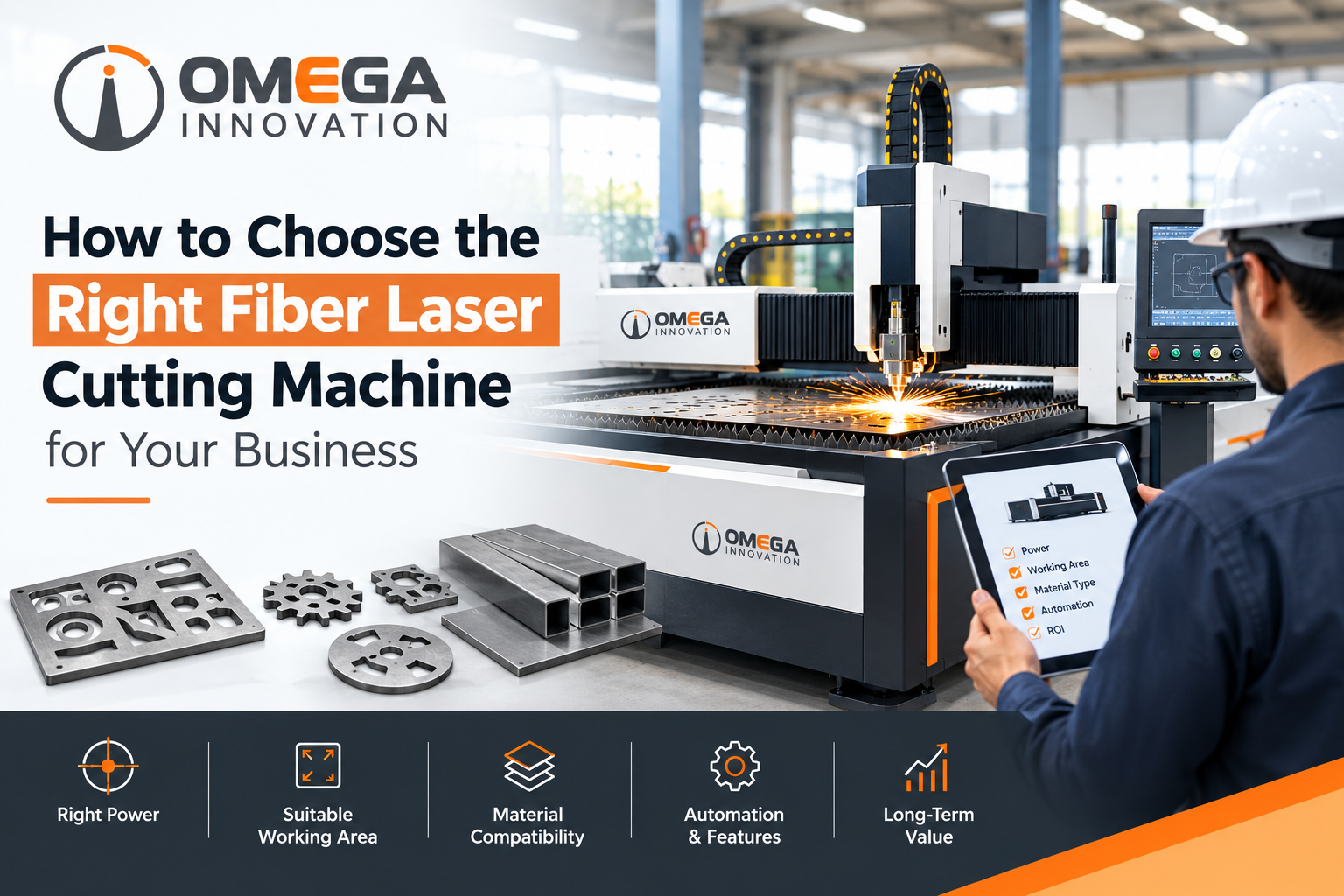
A fiber laser cutting machine is one of the largest capital purchases a fabrication or manufacturing business will make, and the range of choices - power ratings from 1kW to 30kW+, varying bed sizes, automation packages, and dozens of manufacturers - makes the decision genuinely difficult to get right on the first attempt.
Buying based on the highest kilowatt number or the lowest quoted price is one of the most common and most expensive mistakes businesses make. The right machine depends on your material mix, production volume, floor space, workforce, and growth plans - not a single spec sheet number. This guide walks through the practical factors that should drive your decision, in the order they typically matter.
1. Start with Your Material Type and Thickness Range
Before comparing machines, define what you actually cut. Mild steel, stainless steel, and aluminium all respond differently to laser cutting, and your typical and maximum thickness range determines almost every other decision that follows - including power, gas assist requirements, and cutting head specification.
A common mistake is sizing a machine for the thickest job a business handles once a year, rather than the material range it processes daily. This leads to overspending on capacity that sits unused most of the time.
2. Choosing the Right Laser Power
Laser power directly affects cutting speed and maximum cuttable thickness, but more power is not automatically better for every business.
• 1kW–3kW: Suited to thin-gauge sheet metal work, signage, and light fabrication where material rarely exceeds 6–8mm.
• 4kW–6kW: A common mid-range choice for general fabrication shops handling a mix of thin sheet and medium plate up to roughly 16–20mm.
• 8kW and above: Justified for shops regularly cutting thick plate, running high-volume production, or prioritizing maximum throughput on thinner material.
The right approach is to map power against your actual daily material mix and production volume - not your occasional job - and to ask for real cutting samples in your material and thickness range before deciding.
3. Bed Size and Sheet Format
Bed size should match the standard sheet sizes you purchase and the largest parts you regularly cut. A bed too small forces wasteful sheet splitting; a bed far larger than needed consumes floor space and increases machine cost without adding value. Standard formats (such as 1500x3000mm or 2000x6000mm) are worth confirming against your supplier's standard raw material sizes to avoid unnecessary offcut waste.
4. Cutting Speed vs Real Throughput
Quoted cutting speed figures are usually measured under ideal, ungrouped conditions and rarely reflect real production throughput. Actual throughput depends on piercing time, head positioning speed between cuts, material loading time, and nesting efficiency - factors that vary significantly between machines even at similar headline cutting speeds.
When comparing machines, ask for a cycle-time estimate on your actual part files, not just the manufacturer's standard demonstration part.
5. Automation: Buy Now or Plan for Later
Automation - pallet changers, tower storage, robotic unloading - significantly increases machine utilization but also adds upfront cost. For growing businesses, it's often worth confirming whether a base machine can be upgraded with automation later, rather than purchasing full automation before production volume justifies it.
• Single-shift, moderate volume: A manual load machine is often sufficient and more cost-effective initially.
• Multi-shift or high-mix production: Automated pallet changing pays for itself relatively quickly through increased machine uptime.
• Rapid growth plans: Choosing a machine platform with a clear automation upgrade path avoids a costly full replacement later.
6. Control System, Software, and Ease of Use
The control system and accompanying software affect daily productivity as much as the laser source itself. Look for intuitive nesting software that minimizes material waste, straightforward program setup for new operators, and clear diagnostic and fault information that reduces downtime when something does go wrong.
Ask to see the actual control interface in operation, not just a product brochure - an unfamiliar or poorly designed interface can slow down operators for months after installation.
7. Build Quality: Frame, Motion System, and Optics
A machine's frame rigidity, motion system (linear guides, rack and pinion or linear motor drive), and optical component quality determine long-term cutting accuracy and maintenance frequency. Ask specifically about frame construction, positioning accuracy and repeatability specifications, and the brand and warranty terms of key optical components, since these details affect performance years into the machine's service life, well after the initial demonstration.
8. The Overlooked Factor: Laser Source and Driver Electronics
Buyers often focus entirely on the cutting head and gantry, overlooking the laser source itself - specifically the pump diode drivers, heatsink design, and control electronics that determine beam stability and laser source lifespan.
Manufacturers who design and build this electronics layer in-house, rather than sourcing generic third-party modules, are typically better positioned to diagnose issues quickly, source replacement components without long delays, and maintain consistent beam quality over the machine's operating life. This is worth asking about directly during your evaluation, even though it rarely appears on a standard spec sheet.
9. Power Supply, Utilities, and Floor Space Requirements
Before finalizing a purchase, confirm your facility's electrical supply capacity matches the machine's power draw, particularly for higher-power sources. Also account for assist gas supply (oxygen, nitrogen, compressed air), chiller placement and cooling requirements, fume extraction, and clear floor space for material handling around the machine - all factors that affect installation cost and timeline beyond the machine price itself.
10. After-Sales Service, Spares, and Local Support
Laser cutting machines are precision equipment, and downtime is expensive. Before buying, confirm the manufacturer's service response time, whether critical spares (optics, consumables, electronic components) are stocked locally or require long import lead times, and whether remote diagnostic support is available to resolve minor issues without a site visit.
A manufacturer based locally, with in-house engineering rather than outsourced service contracts, generally offers faster resolution - a factor that matters more over the machine's lifetime than most buyers initially realize.
11. Total Cost of Ownership vs Upfront Price
The lowest quoted price is rarely the lowest total cost. Factor in electricity consumption per operating hour, consumables (nozzles, lenses, assist gas), expected maintenance frequency, and the manufacturer's spare parts pricing and availability. A moderately higher upfront investment in a more efficient, better-supported machine frequently costs less over a 5–10 year ownership period than the cheapest available option.
12. A Simple Framework: Matching Machine to Business Stage
• New or small fabrication shop: Prioritize a reliable mid-power machine (2–4kW) with manual loading and strong local service support over maximum capacity.
• Established shop scaling production: Prioritize automation-ready platforms and higher power to support multi-shift operation and growing order volume.
• Large-scale or specialized manufacturer: Prioritize higher power, full automation, and manufacturers offering customization or integration support for specific production needs.
13. Questions to Ask Any Manufacturer Before Buying
• Can you provide cutting samples in my actual material and thickness range?
• Do you design your own laser source electronics, or integrate third-party modules?
• What is your typical service response time, and where are spares stocked?
• Can this machine be upgraded with automation later, or is it a full replacement decision?
• What is the expected electricity consumption per operating hour at typical usage?
• What warranty applies to the laser source, optics, and motion system, respectively?
14. Why Businesses Choose Omega Innovation
Omega Innovation is a laser machine manufacturer based in Ahmedabad, Gujarat, with 300+ machines delivered to customers across automotive, aerospace, electronics, and metal fabrication sectors.
Our capability spans:
• Fiber laser cutting machines across a range of power ratings for sheet metal - mild steel, stainless steel, and aluminium
• CO2 laser cutting and engraving machines
• Laser marking machines
• Handheld laser welding machines
• Custom laser systems - including in-house designed heatsinks for pump diodes, constant-current diode drivers, diode controllers, and custom control GUIs
Because we engineer core laser electronics in-house rather than relying solely on third-party components, we're able to offer responsive local service, faster fault diagnosis, and machines built around long-term reliability not just a competitive spec sheet at the point of sale.
Conclusion
Choosing the right fiber laser cutting machine is less about finding the highest-powered or lowest-priced option, and more about matching machine specification, automation level, and manufacturer support to how your business actually operates today and where it's headed over the next several years. Taking the time to evaluate material fit, real throughput, build quality, and after-sales support will save far more than it costs, long before the machine pays for itself in production.
If you're currently evaluating a purchase, request cutting samples in your own material, ask direct questions about laser source electronics and service support, and compare total cost of ownership not just the invoice price before making a final decision.