
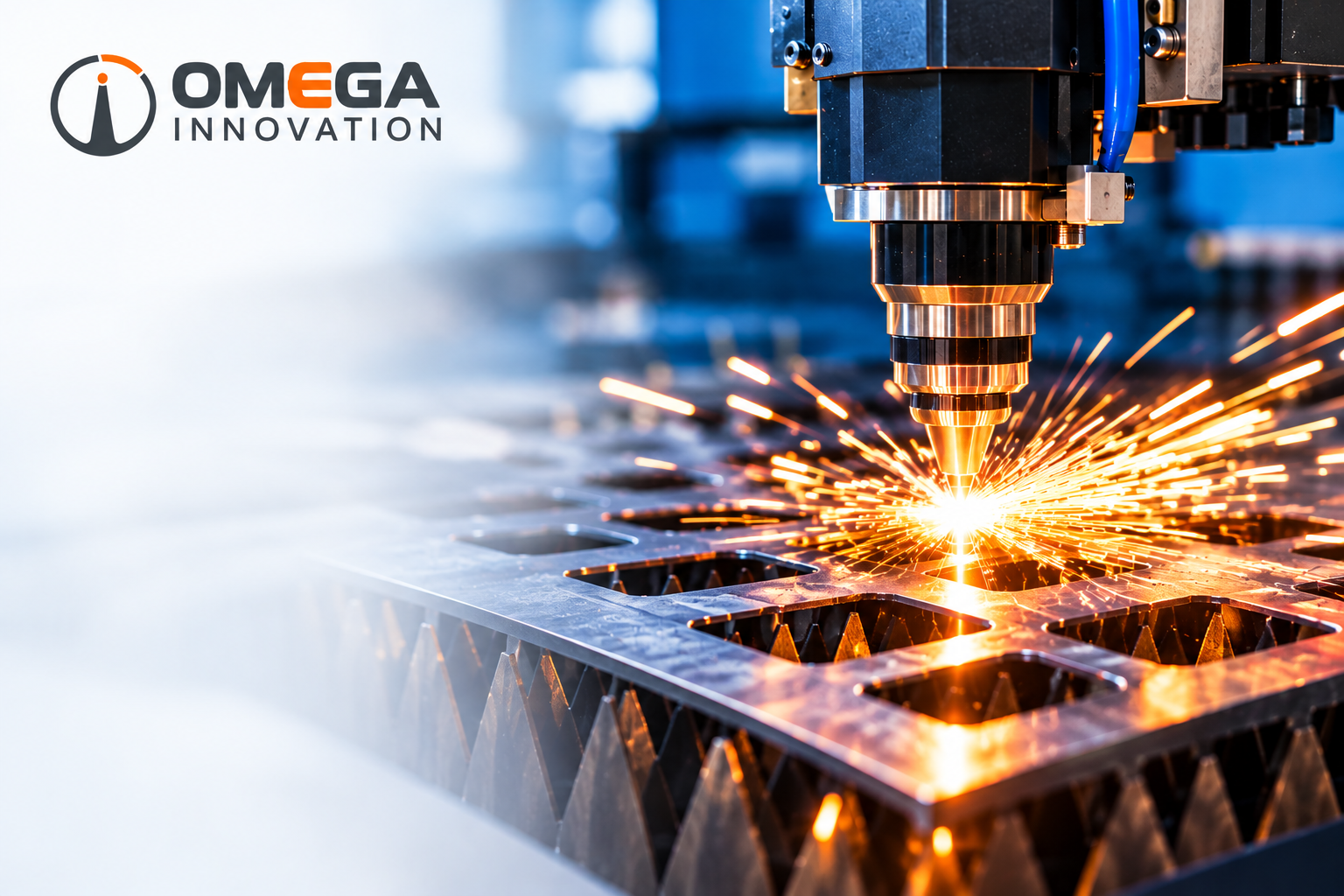
Metal cutting has changed more in the last decade than in the several decades before it. What was once a domain of oxy-fuel torches, plasma arcs, and slow, operator-dependent CO2 laser systems has shifted decisively toward fiber laser platforms that cut faster, consume less power, and hold tolerances that were simply not achievable on older machines.
For fabricators, job shops, and manufacturers evaluating a laser cutting machine purchase or upgrade, the pace of change raises a practical question: which advancements actually matter on the shop floor, and which are incremental refinements dressed up as breakthroughs? This article breaks down the real technological shifts reshaping metal cutting - in laser sources, cutting heads, automation, software, and machine electronics - and what each one means for productivity, cost per part, and part quality.
1. From CO2 to Fiber: The Core Shift in Cutting Technology
For years, CO2 lasers were the industry default for metal cutting. They use a gas-based resonator to generate the beam, requiring mirrors to route it to the cutting head - a design that introduces energy loss, higher maintenance, and slower cutting speeds on thin-to-medium gauge metal.
Fiber laser technology changed the equation. Fiber lasers generate the beam inside a solid-state fiber optic cable doped with rare-earth elements, delivering the beam directly to the cutting head with minimal loss. The practical result: fiber machines cut thin and medium-gauge steel, stainless steel, and aluminium significantly faster than CO2 equivalents, with lower electricity consumption and far less mirror-related maintenance.
CO2 technology has not disappeared - it retains an edge for engraving, thicker non-metal materials, and certain niche applications - but for sheet metal cutting, fiber has become the technology that defines “modern” in laser cutting machine manufacturing.
2. The Kilowatt Race: Why Higher Power Changed Everything
A decade ago, 1kW to 2kW fiber laser sources were considered high-end. Today, 6kW, 12kW, and even 20kW+ sources are commercially available and increasingly common in mid-sized fabrication shops, not just large industrial plants.
Higher power does more than cut faster on thick plate. It changes the economics of a job shop in several ways:
• Thicker material, single pass: Higher-power sources cut mild steel plate exceeding 25–30mm in a single pass without the multiple passes older machines required.
• Speed gains on thin gauge: A higher-power source cuts thin sheet dramatically faster, increasing daily throughput without adding shifts.
• Reduced dross and better edge quality: Correctly matched power and cutting parameters reduce dross formation, cutting down on secondary finishing work.
The caveat: raw power alone does not guarantee better results. Power has to be paired with the right cutting head optics, gas assist system, and control software - otherwise a shop simply pays for capacity it cannot use efficiently.
3. Smarter Cutting Heads: Autofocus, Sensors, and Piercing Intelligence
Cutting head technology has advanced almost as much as the laser source itself. Modern heads include:
• Auto-focus lensing: Automatically adjusts focal position based on material thickness, reducing operator setup time and human error.
• Capacitive height sensing: Maintains a constant standoff distance from the plate in real time, critical when cutting warped or uneven sheet.
• Adaptive piercing control: Adjusts power ramp-up during the pierce phase to prevent splatter and reduce pierce time on thick plate - previously one of the slowest parts of any cutting cycle.
• Collision protection: Sensors that detect head contact with the plate and retract instantly, protecting optics from damage on parts with heavy distortion.
These advances matter most in mixed-thickness production environments, where a single job list might include 1mm sheet and 20mm plate back to back - a scenario where manual head adjustment used to cost significant cycle time.
4. Automation: From Manual Loading to Lights-Out Cutting
Perhaps the most visible shift on the shop floor is automation around the laser source itself. Pallet changers, automated load/unload systems, tower storage integration, and robotic part sorting have moved from “nice to have” to standard specification for shops running multiple shifts.
• Automatic pallet changers: Allow one pallet to be loaded while the machine cuts the other, eliminating idle machine time between jobs.
• Tower and tube storage integration: Feeds raw material directly into the cutting cell, reducing manual material handling.
• Unattended “lights-out” operation: With reliable automation and remote monitoring, machines can run cutting programs overnight with minimal supervision, a significant productivity lever for capacity-constrained shops.
Automation advances have shifted the value proposition of a laser cutting machine from “how fast does it cut” to “how many hours per day does it actually produce parts” - a more accurate measure of return on investment.
5. Software Advances: Nesting, Simulation, and Digital Twins
Cutting hardware improvements are matched by advances in the software controlling the machine.
• Intelligent nesting algorithms: Automatically arrange parts on a sheet to minimize scrap, factoring in grain direction, common-line cutting, and material-saving micro-joints.
• Cycle time simulation: Predicts cutting time and highlights inefficient toolpaths before the program ever reaches the machine.
• Digital twin modelling: Some advanced platforms simulate the entire cutting cell - automation, robotics, and cutting sequence - in a virtual environment, letting engineers optimize a production run before it is physically executed.
For high-mix, low-volume operations - a common profile among Indian fabrication shops - nesting software improvements alone can materially change material yield and per-part cost.
6. Industry 4.0 and IoT: The Connected Laser Machine
Modern laser cutting machines increasingly ship with connectivity built in rather than bolted on afterward.
• Remote monitoring: Operators and managers can check machine status, cutting progress, and fault alerts from a phone or laptop, not just the machine's control panel.
• Predictive maintenance: Sensors tracking laser source hours, optics condition, and motion system wear can flag maintenance needs before a breakdown halts production.
• Production data integration: Cutting data can feed into ERP or MES systems, giving management real production throughput data rather than estimates.
This connectivity layer is becoming a genuine differentiator between machine manufacturers, since it directly affects unplanned downtime - one of the largest hidden costs in any cutting operation.
7. Energy Efficiency and Sustainability Gains
Fiber laser sources are inherently more electrically efficient than CO2 resonators, but efficiency gains have continued within fiber technology itself. Newer diode designs and power supply architectures have reduced electricity draw per kilowatt of cutting power, while improved cooling system design has reduced the load on chillers - a meaningful factor in markets with high electricity costs or unreliable grid supply.
For shops running multiple shifts, the cumulative electricity savings from a modern, efficient laser source can represent a significant portion of total operating cost over the machine's lifetime, alongside a smaller carbon footprint that increasingly matters to export customers with sustainability reporting requirements.
8. Advancements in Pipe and Tube Cutting
Pipe and tube cutting has historically lagged behind flat-sheet cutting in terms of automation and precision. That gap has narrowed considerably:
• Chuck and follow-rest automation: Automatically supports long tube lengths during cutting, reducing vibration-related quality issues.
• Multi-axis cutting heads: Cut complex profile shapes, mitred joints, and intersecting holes directly on round, square, and rectangular tube without secondary operations.
• Combined sheet-and-tube platforms: Some modern machines integrate flat-sheet and tube-cutting capability into a single system, useful for fabricators serving structural and architectural metalwork.
These advances are particularly relevant for structural fabrication, furniture manufacturing, and architectural metalwork sectors, where tube and profile cutting volume has grown steadily.
9. The Overlooked Advancement: Laser Diode Electronics and Control Systems
Much of the public conversation around laser advancement focuses on power output and cutting speed. A less visible but equally important area of progress is happening at the component level - in the pump diode drivers, heatsink design, and control electronics that keep a laser source stable and long-lived.
• Improved heatsink design: Better thermal management for laser pump diodes extends diode life and maintains beam quality consistency over the machine's operating life.
• Precision constant-current diode drivers: Deliver more stable current to pump diodes, directly affecting beam consistency and cutting repeatability batch after batch.
• Custom control systems and GUIs: Purpose-built controllers and monitoring interfaces give operators clearer visibility into laser source health, rather than relying on generic third-party control boxes.
Manufacturers who design and build this electronics layer in-house - rather than sourcing generic components - typically offer better long-term reliability and more responsive after-sales support, since they understand the machine at the component level, not just the assembly level.
10. Industries Benefiting Most from These Advances
While every metal-cutting operation gains something from modern laser technology, certain sectors see outsized benefit:
• Automotive and auto-component manufacturing: Tight tolerances and high part volumes benefit directly from cutting speed and repeatability gains.
• Sheet metal fabrication and job work: Mixed-thickness, high-mix production benefits from smarter cutting heads and nesting software.
• Architectural and structural metalwork: Gains from advances in tube, pipe, and profile cutting capability.
• Electronics and precision components: Benefit from improved beam quality and finer cutting tolerances on thin-gauge material.
• Aerospace component suppliers: Rely on the consistency that improved diode electronics and control systems deliver across long production runs.
11. What to Evaluate Before Upgrading Your Laser Cutting Machine
Given the pace of advancement, a purchase decision should be based on operational fit, not the newest specification sheet alone.
• Match power to your actual material mix: A higher kilowatt rating only pays off if your production genuinely includes thicker material or high-volume thin-gauge runs.
• Verify automation compatibility: Confirm the machine can integrate with pallet changers, towers, or robotic handling - now or as a future upgrade path.
• Ask about the control system and software: Nesting efficiency and simulation tools can affect material cost more than the laser source itself.
• Check component-level engineering: Ask whether the manufacturer designs its own driver electronics and control systems, or integrates third-party modules - this affects long-term serviceability.
• Request real cutting samples: Ask for cut samples in your actual material and thickness range, not generic demonstration pieces.
• Confirm local service and spares support: Downtime cost is driven as much by service response time as by machine specification.
12. Working with Omega Innovation: What Sets Us Apart
Omega Innovation is a laser machine manufacturer based in Ahmedabad, Gujarat, with a track record of 1200+ machines delivered to customers across automotive, aerospace, electronics, and metal fabrication sectors.
Our manufacturing and engineering capability covers:
• Fiber laser cutting machines for sheet metal - mild steel, stainless steel, and aluminum
• CO2 laser cutting and engraving machines
• Laser marking machines for industrial identification and traceability
• Handheld laser welding machines
• Custom laser systems - including in-house designed heatsinks for laser pump diodes, constant-current diode drivers, diode controllers, and custom control GUIs for industrial and laser systems
That last category matters: Omega Innovation designs and builds core laser electronics in-house rather than relying solely on third-party modules. This component-level engineering capability is what allows us to support, service, and continuously refine the machines we deliver - not just assemble them.
We work with:
Fabrication shops upgrading from CO2 or older fiber platforms, manufacturers building out multi-shift cutting capacity, OEMs requiring customized laser system integration, and businesses seeking dependable local service and support in Gujarat and across India.
Conclusion
Laser cutting technology has advanced on nearly every front at once - laser source efficiency, cutting head intelligence, automation, software, connectivity, and the component-level electronics that keep a machine reliable over years of production. The manufacturers making genuine progress are the ones investing across all of these layers, not just chasing higher kilowatt numbers on a spec sheet.
For any business evaluating a laser cutting machine purchase, the right question is not “what's the newest technology available” but “which of these advancements will actually move the needle for my material mix, production volume, and shift pattern.” Working with a manufacturer who understands that distinction - and can back it with real engineering depth - is what separates a good investment from an expensive one.